
Beyond Fireworks: Why Every Fourth of July Page Looks the Same
Everyone has the fireworks photos. Almost nobody has the ones that actually matter.

Beyond Fireworks: Why Every Fourth of July Page Looks the Same Everyone has the fireworks photos. Almost nobody has the ones that actually matter.
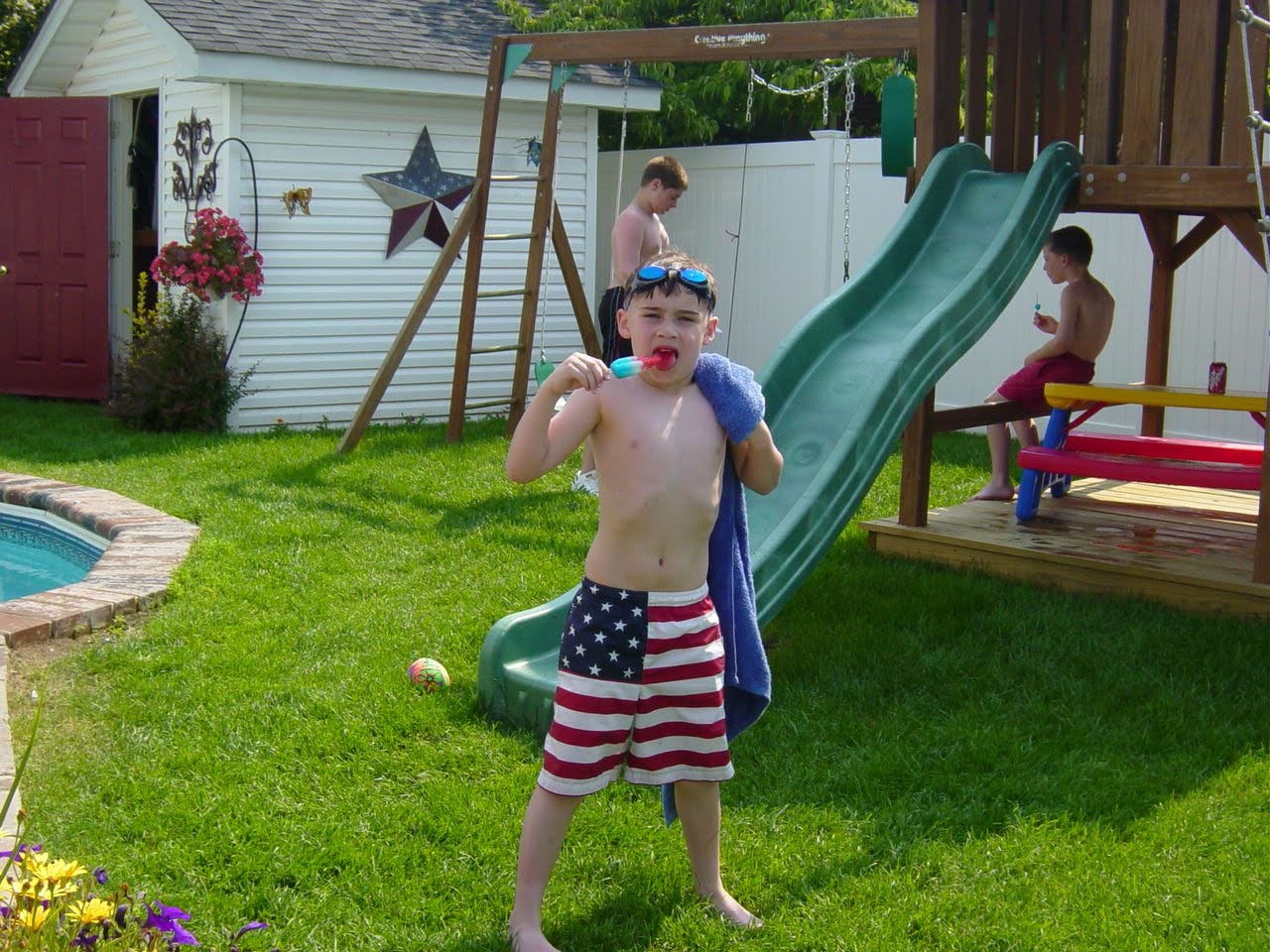
This is not a fireworks photo.
It’s a red popsicle and American flag swim trunks and swim goggles that never quite made it back into the pool. It’s a Tuesday afternoon in July that I almost didn’t document. And it’s one of my favorites.
I didn’t think to take it because it was important. I took it because he was standing there being completely himself, and something in me knew to point the camera.
That’s the thing about the photos that stop you cold years later. You rarely knew you were taking them.
Every year, somewhere around the first week of July, scrapbookers across the country end up with remarkably similar camera rolls.
Fireworks against dark skies. American flags on porches. Kids waving sparklers. A patriotic dessert that looked much more impressive before the humidity got involved.
We all take them. I take them too.
But the fireworks tell me what happened. The other photos tell me what it felt like.
They remind me of the year we dragged lawn chairs across an entire park because someone heard there was a “better viewing spot” on the other side. They remind me of a cooler full of those technicolor freeze pops, the citronella candles, the annual search for bug spray that somehow disappears every single summer.
They remind me of my people.
That’s why so many holiday scrapbook pages end up looking alike. We naturally point our cameras at the event because that’s where the action is. The parade rolls by. The fireworks start. And we document the obvious thing happening right in front of us.
What we often miss are the smaller moments surrounding it. The ones that make our experience different from everyone else’s.
Think about your own Fourth of July for a second. Long before the fireworks start, there’s a whole story already unfolding.
Someone is packing the cooler. A child is asking every ten minutes if it’s time to leave yet. The grill is heating up. Somebody is standing in the kitchen wondering why they thought a flag-shaped fruit platter was a good idea.
Those moments may not feel important while they’re happening. But they’re often the details that age the best.
The funny thing about traditions is that we rarely notice them while they’re forming. We assume they’ll always be there. The same family members in the same backyard. The same person behind the grill while everyone else relaxes.
Because it feels familiar, we stop seeing it.
Then a few years pass. The kids get older. People move. Someone isn’t there anymore. The parade changes. And suddenly those ordinary details become some of the most valuable things we ever documented.
Memory keeping isn’t really about preserving big events. Future generations will know there were fireworks on Independence Day. What they won’t know is how your neighborhood celebrated. What your family considered a holiday meal. Which lawn chair belonged to Grandpa because nobody else was allowed to sit in it.
Those are the details that turn a generic holiday into your story.
This is why I always encourage people to photograph the beginning of the day, not just the highlight reel.
Take a picture of the cooler sitting by the back door. Photograph the kitchen counter covered with hamburger buns and half-finished side dishes. Capture the crowd settling into their chairs before dusk.
And don’t stage the food. Not the Pinterest version. The real version. The burger falling apart after the first bite. The melting popsicle. The pie that leaned slightly to one side during transport. Real life has a texture that perfection never captures, and those imperfect details are often what make a page feel alive years later.
One of my favorite times to take photos is after the fireworks end. While everyone is packing up and heading home, the story is quietly winding down. Lawn chairs folded. Glow sticks scattered in the grass. Children asleep on shoulders. There’s a gentle exhaustion that settles over the evening, and it tells a completely different story than everything that came before it.
The fireworks last a few minutes. The traditions, the preparations, the people, the ordinary details surrounding them. That’s what gives the day its meaning.
So this year, take the fireworks photos. Take the parade photos.
Then look around.
Notice the people who came with you. Notice the traditions you’ve stopped seeing because they’ve become so familiar. Notice the little details that seem too ordinary to matter.
Those are usually the photographs that become priceless. And they’re almost always the ones nobody thinks to take.
The photo at the top of this post is proof.
What does your Fourth of July actually look like behind the fireworks? I’d love to hear it in the comments.
And if you’re ready to do something with all those photos, I’ve got a whole collection built for exactly this kind of storytelling. Backyard BBQs, small-town parades, popsicles, lawn chairs, the whole day. Browse the Red, White and You collection here.